Vintage Planetariums
I started collecting vintage astronomy items, mostly toy planetariums, a few years ago. I have several examples of the Spitz Junior toy planetarium manufactured by Harmonic Reed Inc from 1954 into the early 1970s. These fit right in with my fascination of the 1950s (see my kitchen). Below is a picture of a few of my Spitz Juniors. To the left is a custom, possibly factory produced, model with a custom brass pointer (the original was a cardboard tube). The pointer plugs into a different spot than the pointer on a regular Spitz Jr. There is no hole or indication of repair at the site the original cardboard pointer would normally plug into, leading me to believe that this was a different model (possibly for classroom use) or a custom order item. It has a custom made wood box for storage. The light on the flexible shaft is reddish orange. The reostat that controls the star brightness on a normal Spitz Jr. controls this light too. When the stars are dim, the light is bright and looks like the sunset. As you brighten the stars, the light dims and the stars become visible, thus producing the really neat effect of going from sunset to night.
In the middle is the ultra rare Sky Zoo. It was designed as a companion to the Spitz Jr. and projects the outline of the constellations on the ceiling. When used with the Spitz Junior the effect is amazing. The Sky Zoo did not sell well and most of the 2000 units produced were thrown away by the retail stores, leaving very few in existance. Some sources I have seen on the internet claim that it is the rarest toy planetarium. I have since found out that the Sky Zoo dome could be purchased without the base and could be swapped back and forth with the star dome on the Spitz Jr. Since the original idea was to project the representations of the constellations over the stars, swapping domes would seem to defeat that purpose. But, this may explain how I got my complete Sky Zoo: I first bought a Spitz Junior base with the Sky Zoo ball on it. A few weeks later I found a Sky Zoo base with a star ball on it. I combined the two to get a complete Sky Zoo.
To the right is a battery powered Spitz Junior produced in the 1960s. I also have a Nova Home planetarium that is not pictured. It is the same as the Spitz Junior. My understanding is that the company that produced the Nova Home model took over when Armand Spitz retired in 1969. It is the same as the Spitz Junior but the base is a different color.

There is a Yahoo group dedicated to the Spitz Junior planetariums:

Click to join spitz-jr
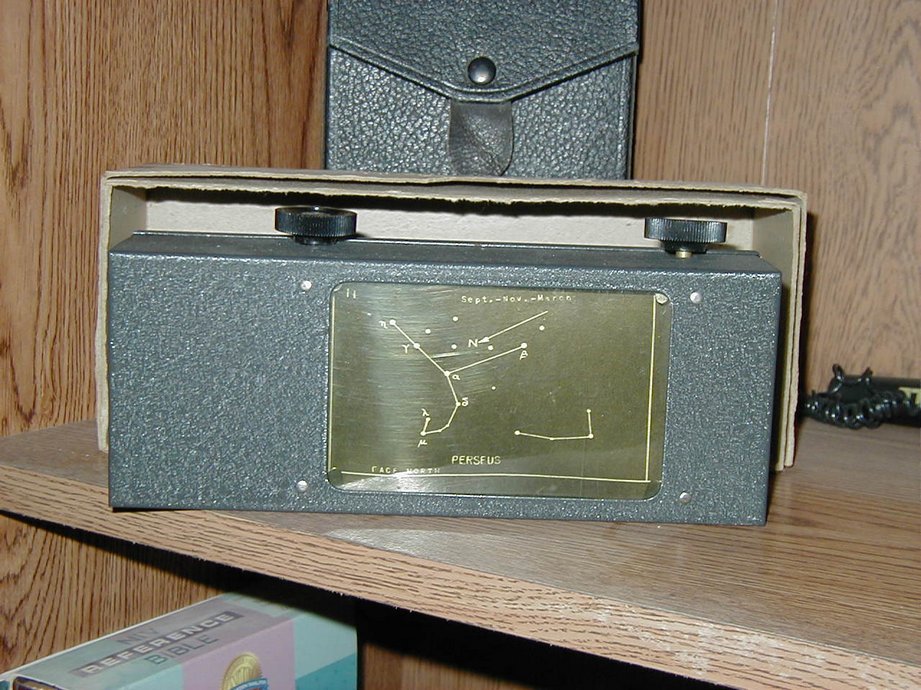
Next is a small hand-held planetarium from the late 1930s. It has two rollers that advance a long paper with various constellations printed in each frame. A battery powered light in back lights up the white printed lines and stars for viewing in the dark. The constellations are shown as they appear at certain dates in 1939 and 1940.
Next is the rare Renwal Cosmorama. This was a kit like a model car kit. Once assembled, you can project the stars at various times of the night, and year. Truely a fascinating home planetarium. It has a bright light with a brightness control that projects daylight (with clouds) onto the 2' diameter dome. Dimming the daylight causes the stars to brighten, thus creating the effect of fading from daylight into night. Below is a picture in a lighted room, then with the lights off showing the control panel and stars projected onto the dome. I have scanned the assembly instructions, click here to view them.


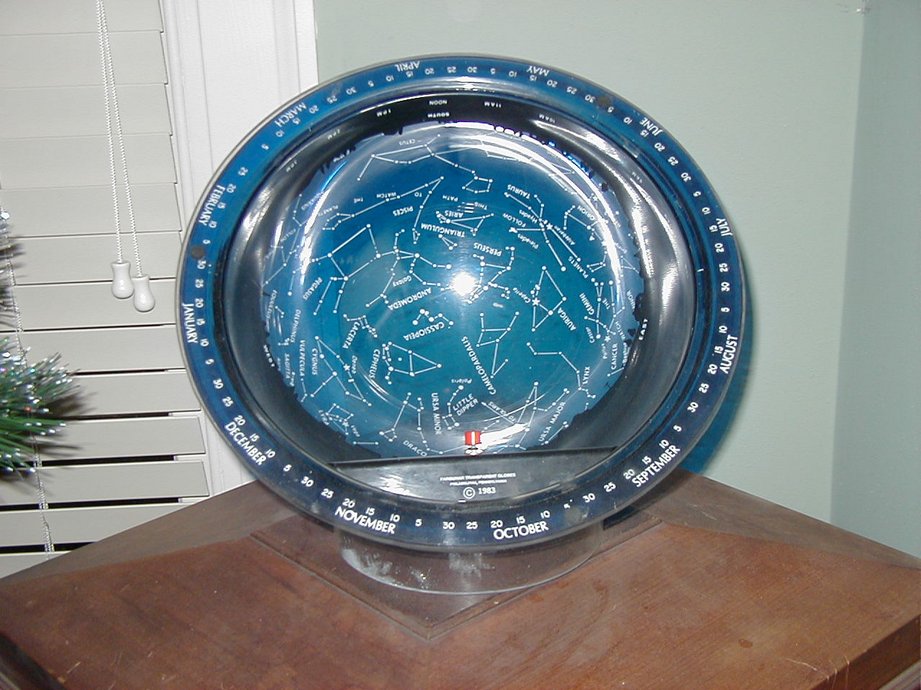
Next is the Bowl Of Night from 1983. This was a gift from my mom when I was 14. It has a battery powered back light to illuminate the bowl in a dark room or outside.
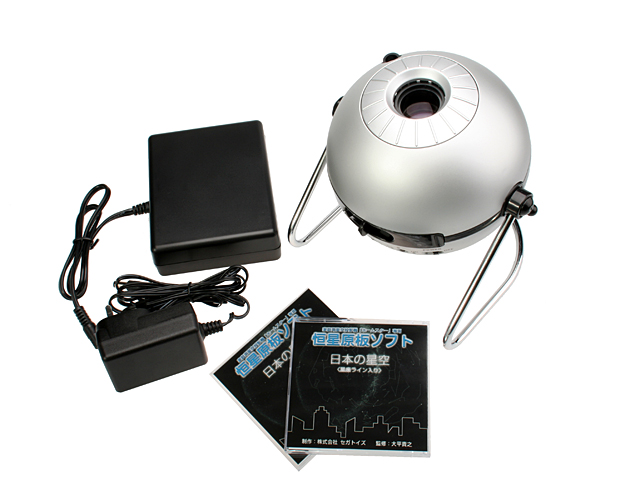
Finally is the Sega Homestar Planetarium. Mine is the Winter 2005 Limted Edition. This wonderful planetarium has not been released in the U.S. yet, despite phenominal sales in Japan. I bought mine on Ebay from Japan. It projects a high quality image of the night sky: 10,000 stars complete with the Milky Way, a shooting star effect, and it rotates in the same manner as the night sky - 12 minutes for a complete rotation. I use it nearly every night - it is like sleeping under the stars without the mosquitoes. There are star disks with and without the constellations outlined, and for both Northern and Southern Hemispheres, and the rotation can be reversed for the Southern Hemisphere. Here is a good review of the Homestar: http://the-gadgeteer.com/review/sega_toys_homestar_planetarium
Updated June 4, 2011